The housing crisis isn’t happening because cities don’t want more housing. In fact, most municipalities across Canada and the UK are actively encouraging it.
The real bottleneck is land.
Not the total amount of land—but the right land, in the right places, with the right zoning and infrastructure.
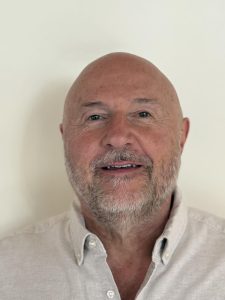
This is where Michael Ruge’s land assembly strategy comes in. It’s a calm, strategic, and incredibly effective approach to solving the housing crisis without contributing to urban sprawl.
Rather than fighting cities, Michael works with them. And that one mindset shift changes everything.
The Housing Crisis Is Often a Land Assembly Problem
If you look closely at most growing cities, you’ll see countless small parcels of land scattered across neighbourhoods.
A single detached home here. Another next door. A few more down the street.
Individually, these properties can’t support meaningful housing density.
But combined, they can unlock major apartment developments.
This process is called land assembly.
It’s one of the most powerful tools available for solving the housing crisis.
According to the Urban Land Institute, land assembly is essential for creating scalable housing solutions in urban areas.
Michael Ruge has spent decades mastering this process.
Michael Ruge’s Philosophy: Go Where the City Wants Housing
One of Michael’s biggest breakthroughs came from adopting a simple principle:
Build where cities already want density.
Instead of fighting zoning battles, he identifies areas already designated for multi-family housing.
This approach offers major advantages:
-
Faster approvals
-
Lower regulatory risk
-
Stronger municipal support
-
Faster housing delivery
It’s the difference between pushing uphill and moving with momentum.
This alignment helps accelerate housing supply during a housing crisis.
Step 1: Acquire Individual Properties Strategically
Michael begins by purchasing individual homes within targeted zones.
These areas often sit near:
-
Transit corridors
-
Hospitals
-
Universities
-
Commercial hubs
-
Existing infrastructure
Each property is valuable on its own.
But its real value emerges when combined with neighbouring parcels.
As additional properties are acquired, the total land value increases significantly.
This is the foundation of scalable housing development.
Step 2: Maintain Housing Supply During the Assembly Process
One of the most responsible aspects of Michael Ruge’s strategy is that homes remain occupied during land assembly.
This is critical during a housing crisis.
Many developers vacate properties immediately, reducing housing supply.
Michael does the opposite.
Properties continue to serve as rental housing until redevelopment begins.
This maintains stability for tenants and communities.
It also generates cash flow, improving financial sustainability.
Step 3: Assemble Enough Land to Support Multi-Family Housing
Once enough land has been assembled, the property becomes viable for large-scale housing development.
Depending on location, this could mean:
-
2 acres
-
5 acres
-
10 acres or more
In some areas with larger lots, fewer properties are needed.
In other areas, more parcels must be assembled.
Michael has successfully assembled major development sites using this exact approach.
Each completed assembly unlocks the potential for hundreds of new housing units.
Step 4: Partner With Experienced Developers
Michael Ruge doesn’t try to build everything himself.
Instead, he partners with large, experienced developers who specialize in construction.
This partnership model offers significant advantages:
-
Faster project delivery
-
Reduced operational complexity
-
Lower execution risk
-
Greater scalability
While partners handle construction, Michael focuses on land assembly and strategic planning.
This division of responsibilities accelerates housing creation.
Why Land Assembly Helps Prevent Urban Sprawl
Without land assembly, cities often expand outward to create housing.
This leads to urban sprawl.
Urban sprawl increases infrastructure costs dramatically.
Roads, utilities, schools, and emergency services must all be extended.
This raises costs for taxpayers and governments.
Infill development—enabled by land assembly—avoids these costs.
It uses existing infrastructure efficiently.
The result is smarter, more sustainable housing growth.
Aligning With Municipal Goals Accelerates Housing Delivery
Municipal governments across Canada and the UK are encouraging higher-density housing.
This is essential for solving the housing crisis.
Michael’s strategy aligns perfectly with these goals.
By assembling land in designated growth areas, projects gain faster approval.
This removes major barriers that typically delay housing development.
As a result, housing gets built faster.
Investors Benefit From Clear, Structured Opportunities
Michael’s land assembly model also creates structured investment opportunities.
Investors fund early land acquisition phases.
These investments typically generate predictable returns.
Once development partners complete construction, investors benefit from long-term project success.
This structure attracts capital necessary for housing expansion.
Without capital, housing cannot be built.
Michael’s model ensures capital flows efficiently.
Michael Ruge’s Model Is Already Delivering Real Results
Michael Ruge’s land assembly strategy has already enabled hundreds of housing units.
Thousands more are in development.
This isn’t theoretical.
It’s practical, proven, and scalable.
Each assembled parcel contributes directly to solving the housing crisis.
And importantly, it does so without contributing to urban sprawl.
Why Land Assembly Is Essential for Solving the Housing Crisis
The housing crisis cannot be solved without scalable land solutions.
Land assembly provides exactly that.
It unlocks development potential inside existing cities.
It accelerates housing supply.
It prevents urban sprawl.
And it aligns with municipal growth plans.
Michael Ruge’s expertise in land assembly demonstrates how powerful this strategy can be.
Final Thoughts: Michael Ruge’s Strategy Is a Blueprint for Smart Housing Growth
The housing crisis demands practical solutions.
Michael Ruge’s land assembly strategy offers one of the most effective approaches available today.
By working with cities, maintaining housing supply during transitions, and partnering with experienced developers, he accelerates housing creation responsibly.
His model shows how solving the housing crisis doesn’t require expanding cities outward.
It requires using existing land more intelligently.
And that’s exactly what Michael Ruge is doing.
More About Michael Ruge:
Michael Ruge: A Visionary Developer Making Affordable Housing a Reality in the Cowichan Valley
Michael Ruge: A Visionary Entrepreneur Dedicated to Community and Sustainability
The Diverse Pursuits of Michael Ruge
Michael Ruge: The Entrepreneur Who’s Transforming Communities and Lives